
Top 9 B2B Web Design Trends in 2026

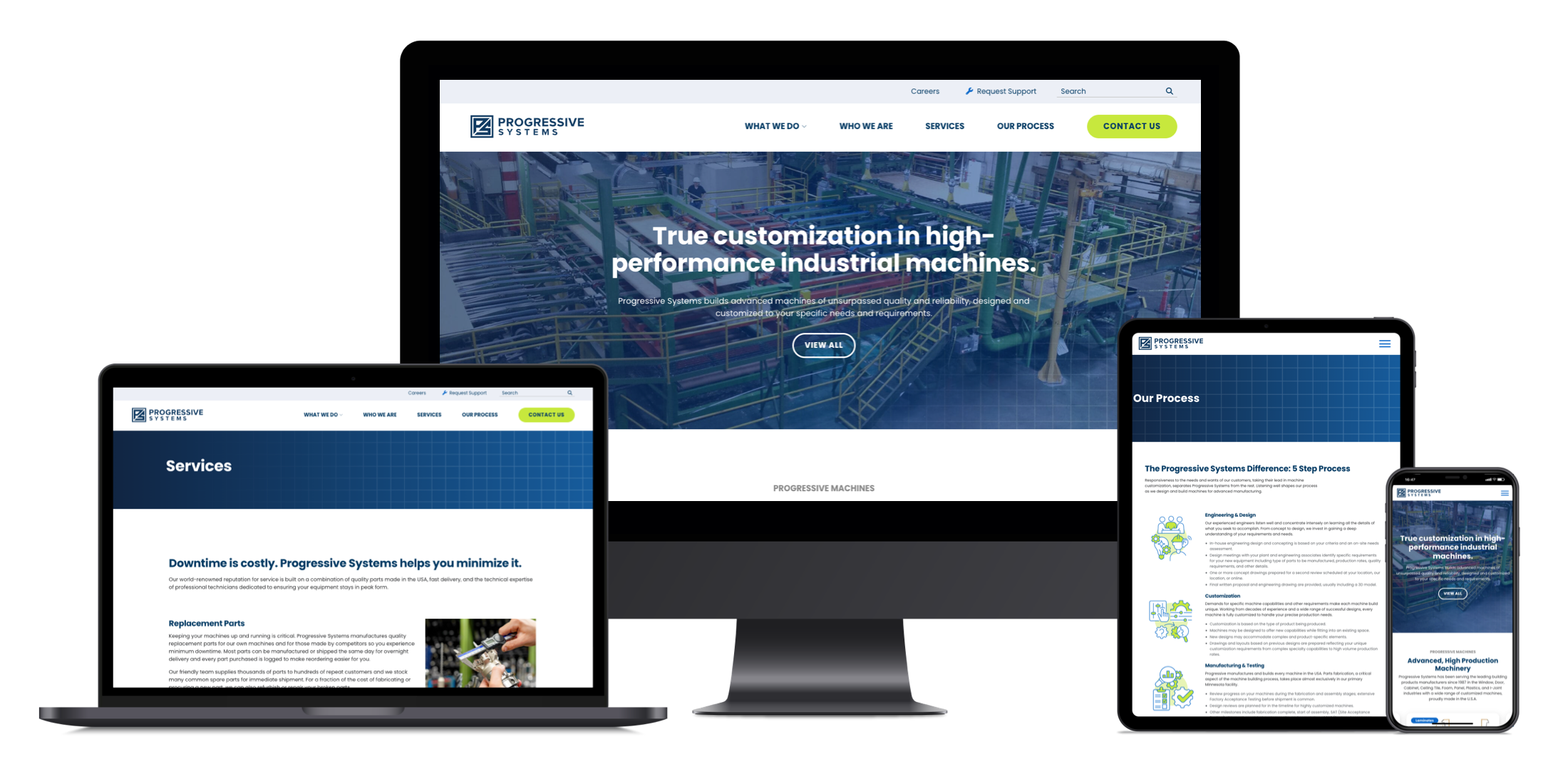
A well-designed, high-performing website is no longer optional; it’s essential to competing in today’s competitive B2B market.
A well-designed website is a critical element of any successful modern marketing strategy. In today’s fast-evolving digital landscape, your website isn’t just a platform; it’s a reflection of your business’s value, innovation, and expertise. As technology advances, so do the expectations of B2B audiences. The past year brought groundbreaking developments in AI technology, redefining how businesses engage with their users. Naturally, web design strategies and UX best practices have evolved alongside these advancements.
In the technical B2B world, when you’re selling custom products & services, visitors to your website will perceive the quality of their experience with your website as equal to the quality they can expect from your offerings. A modern, intuitive website communicates quality, credibility, and leadership in your industry. In today’s market, staying current with trends and techniques isn’t optional; it’s critical. Below are the nine trends we’re seeing at our B2B website design agency:
B2B Website Design Trends & Best Practices
1. Design Trend #1. Using High-Quality Product Imagery
As design trends head towards simplicity, users are expecting visuals that support and clarify the content, rather than just visual filler. It’s critically important that any photos are an accurate portrayal of your offerings and the experience of working with your team. Visitors can often detect stock photography, which can lower their level of trust and leave critical gaps in their understanding of your offerings. So investing in unique, high-quality photography can create a more impactful and credible online presence.
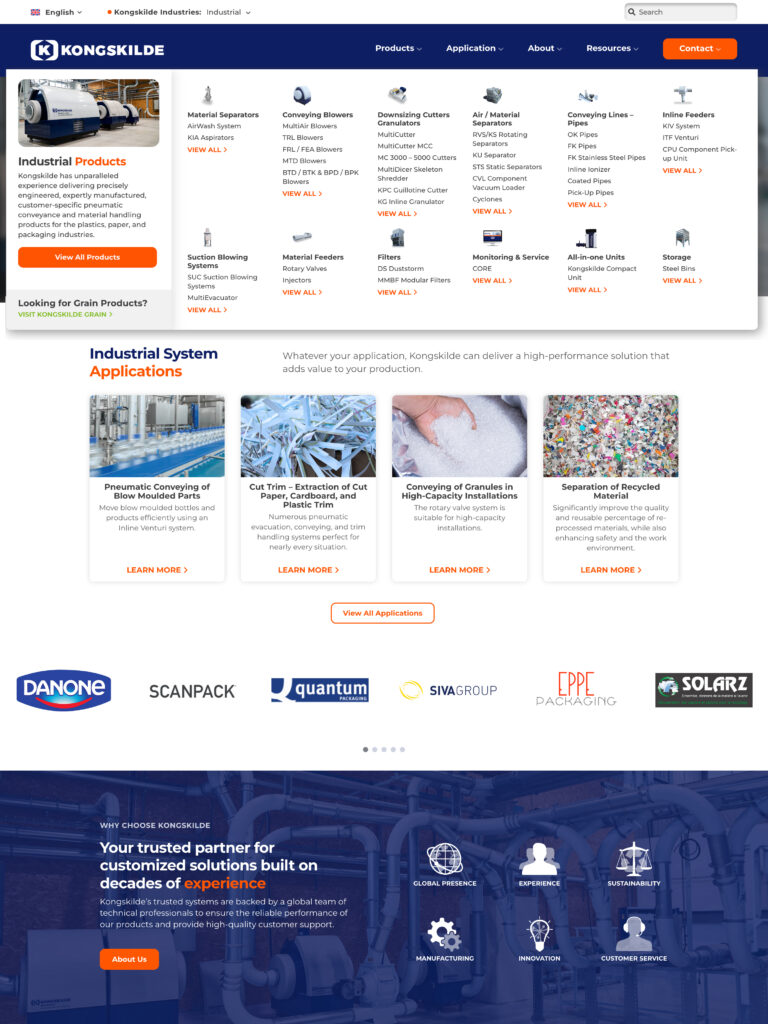
For example, Kongskilde Industrial’s new website included refreshed photography at the forefront. We were able to utilize this product photography in a unique mega menu design that allows users to visually navigate product categories.
 Check out our Kongskilde website redesign case study.
Design Trend #2. Showcasing with Animation
Faster-loading websites now allow for purposeful animation that enhances the user experience without sacrificing performance. While the majority of elements should remain static, creating visual interest or emphasizing key information with subtle movement is a B2B website design trend we anticipate to continue through 2026. When used sparingly and intentionally, this can add a fun, engaging touch to a website.
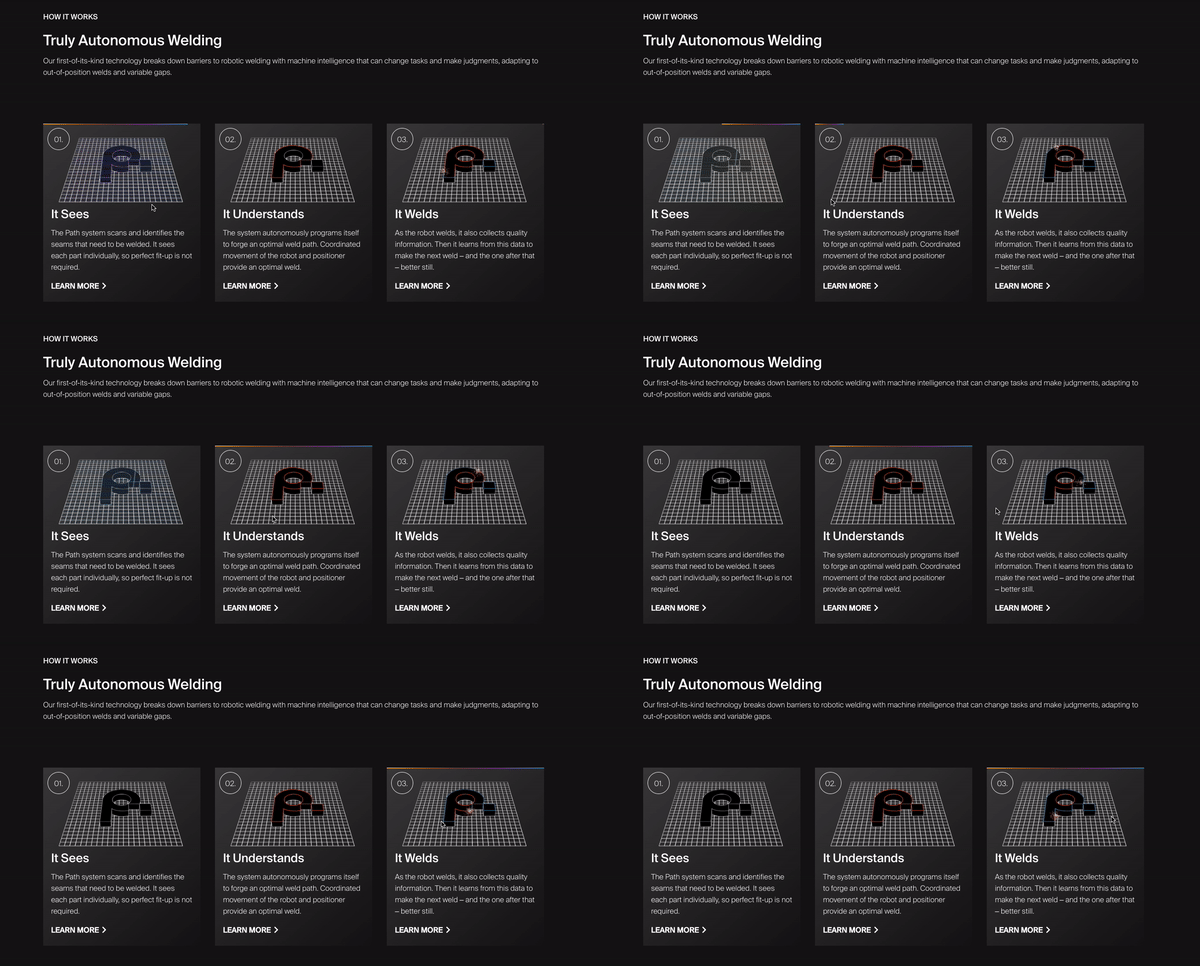
For example, Path Robotics, a supplier of robotic welding solutions, has a complex software program that is better explained using infographics with motion. In the design and development process, we strategically planned for the images to only move subtly, when hovered over, to keep the motion from overwhelming the user.
 Check out our Path Robotics website redesign case study.
Design Trend #3. Prioritizing Content-Oriented Design
As platforms like WordPress and other web development tools evolve, emphasis has shifted toward editor-friendly, flexible design interfaces that prioritize content. The days of rigid templates and overwhelming “walls of text” are fading, replaced by dynamic layouts that adapt to the specific needs of each page. Page-by-page layouts are now unique, as every page serves its purpose effectively. Dynamic layouts include a seamless blend of text, visuals, and interactive elements, making it easier to highlight key information and tell the story of products and offerings.
Product pages like Monico Monitoring’s mCore® SDR showcase how dynamic, page-specific layouts can be tailored to the unique goals of each product. The design organizes complex technical information into structured, easy-to-navigate sections. Rather than relying on a rigid template, the page blends product visuals, concise feature summaries, and detailed capability explanations in a way that supports how users navigate this specific solution. Supporting elements such as interface previews, system diagrams, industry use cases, and FAQs provide deeper context without clutter.
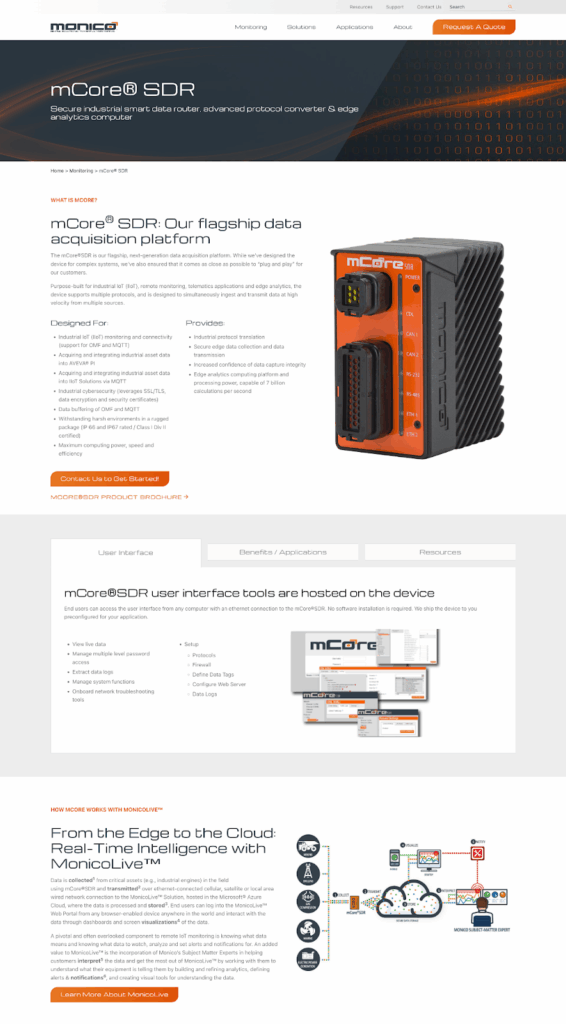
Check out our Monico Monitoring website redesign case study.
Design Trend #4. Embracing “Scrollytelling”
Scrolling through long web pages has become a natural part of how users explore digital content. It’s become an intuitive way to explore content. Designers are leveraging vertical space to transform dense, complex information into interactive, narrative-driven experiences. Modern B2B homepages often start with a clear positioning statement and high-level overview, then progressively introduce deeper details, supporting visuals, and interactive elements as users scroll. The additional space, ability to add more visual content, infographics and imagery creates a more effective way to keep users engaged than words alone.
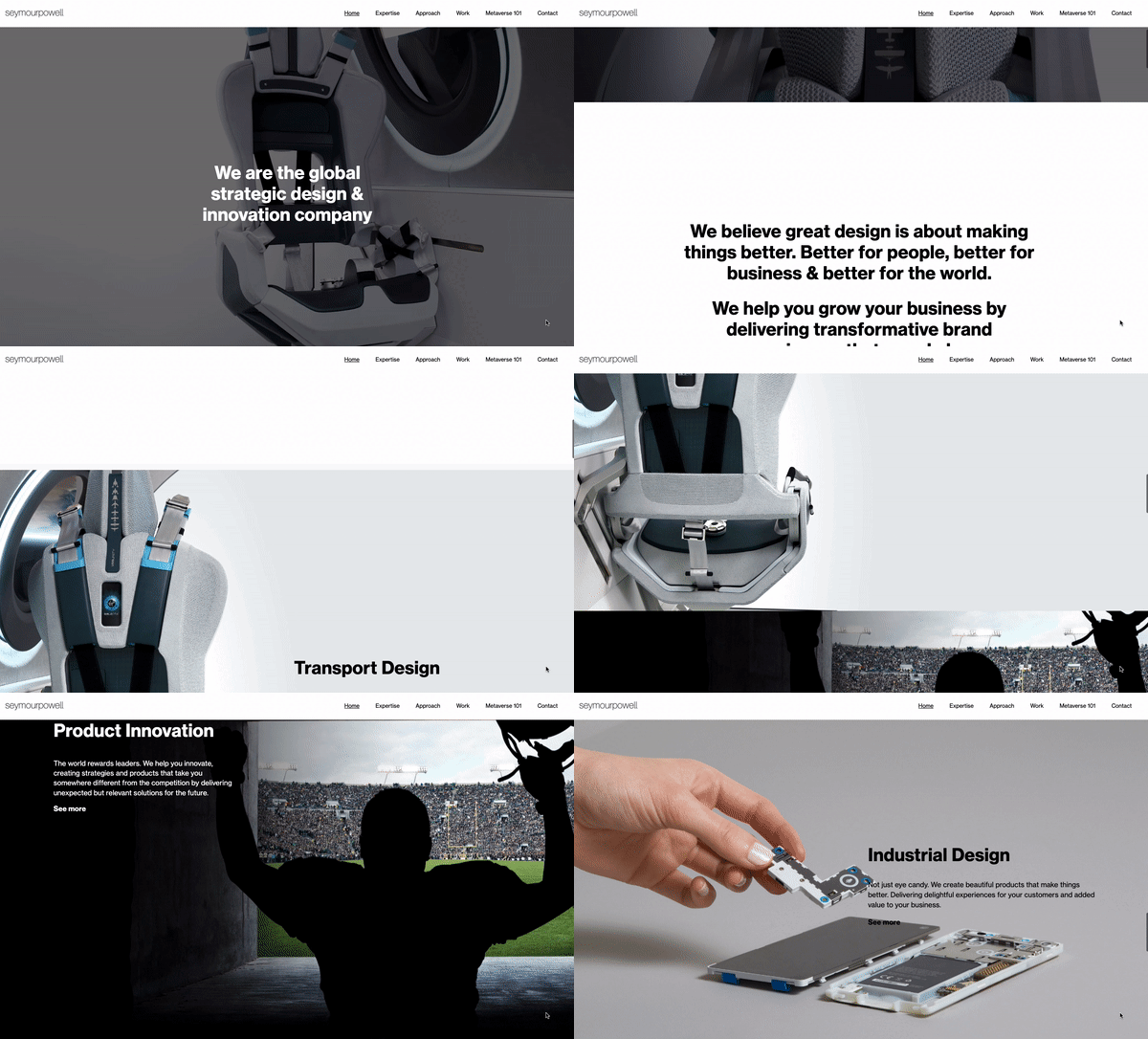
Design Trend #5. Improving UX with Sticky Menus
The trend of longer, scrolling website pages calls for the standard use of sticky menus. A fixed navigation bar, aka “sticky menu,” makes sure visitors don’t get lost. When the main menu is always available at the top of the screen, the user is free to scroll down a very lengthy page while maintaining constant access to other pages, without having to scroll back up to the top or down to the bottom.
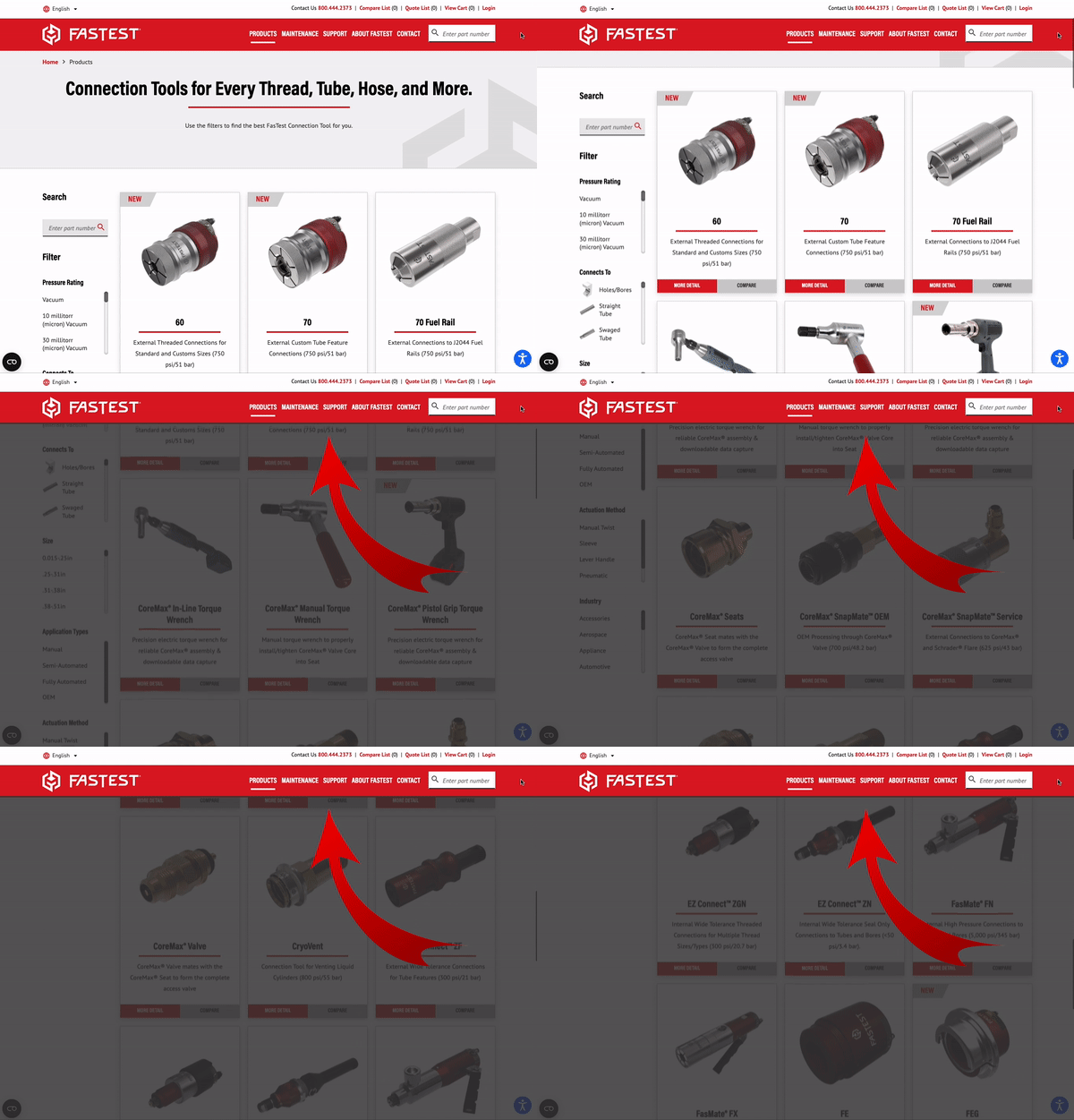 Check out our FasTest website redesign case study.
Design Trend #6. Embracing Big, Bold Type
In our fast-paced, digital world we have less and less time to convert. With attention spans getting shorter, and users spending less time on websites designers are adapting to include large headlines and shorter messaging to capture attention. This is generally accompanied by additional content, in smaller type, to further explain concepts or increase SEO value. The result is a clearer, more scannable experience that balances strong first impressions with meaningful information.
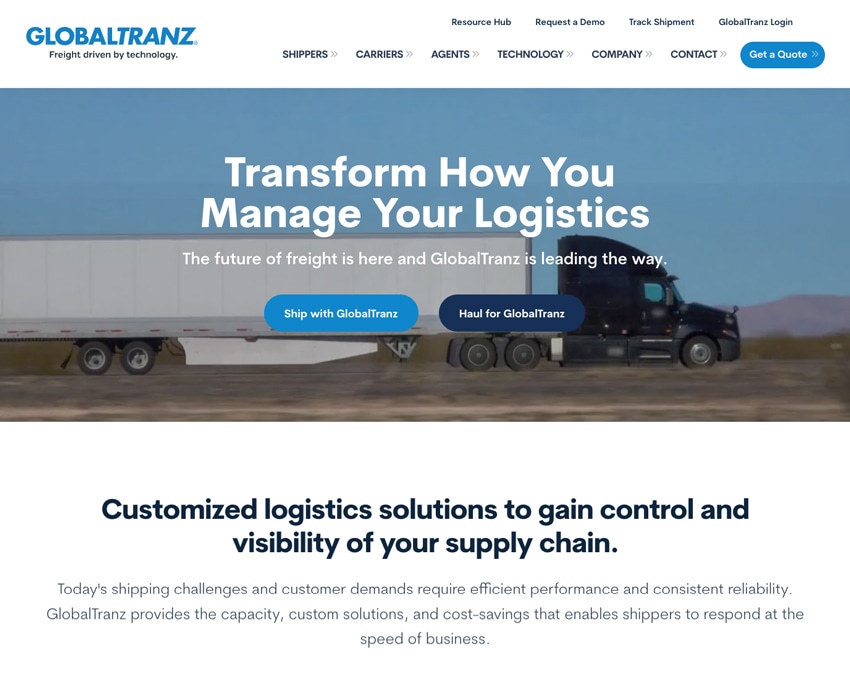
Check out our GlobalTranz website redesign case study.
Design Trend #7. Organizing Information with Grid Layouts
Web design is increasingly focused on helping users find what they need faster. Grid-based layouts organize information into clear, scannable sections that support quick comparison and confident decision-making. For B2B and industrial websites, this structure makes it easier to surface critical specs, features, and value points without forcing users to dig through long pages of content.
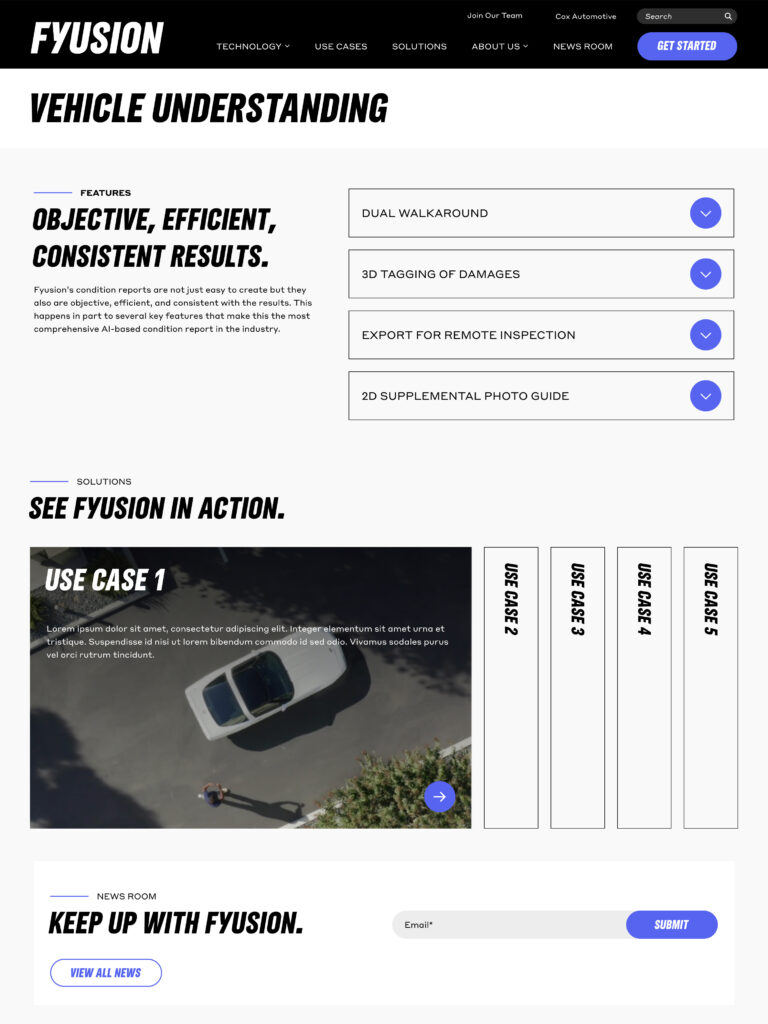 Check out our Fyusion website redesign case study.
Design Trend #8. Aligning Web Design with AI Integration
AI is now fundamentally changing how B2B buyers research and evaluate solutions. With the rise of AI-powered search tools, chat bots, and intelligent site experiences, websites must be designed to serve both human users and the AI-driven search systems that help them discover information. Clear page hierarchy, well-organized content, and technically sound site architecture help ensure your expertise is accurately interpreted by AI-powered search tools. A well-designed website goes beyond visual appeal. Clear structure and organization help ensure your thought leadership, product expertise, and industry insights are visible in AI-driven search results and summaries.
Design Trend #9. Bringing Products to Life with 3D Visuals and Interactive Elements
This year, we’ll see 3D visuals and interactive elements become commonplace elements in B2B web design. Users can explore complex offerings through a streamlined and engaging experience. For instance, visualizing internal components of machinery or simulating real-world applications to better understand the products and services. For technical and industrial buyers, this level of interactivity improves understanding and reduces uncertainty. Engineers, procurement teams, and decision-makers can evaluate product fit, performance, and configuration options without needing an on-site demonstration.
Why Staying Ahead in B2B Web Design Trends Matters in 2026
Staying ahead in B2B web design means embracing change, adopting innovation, and understanding the evolving needs of your audience. Your website is more than a digital platform; it is a strategic asset that shapes perceptions, drives engagement, and strengthens your competitive edge.
By leveraging these web design trends, your business can create a website that doesn’t just look good but functions as a powerful tool to attract, engage, and convert your target audience. As the B2B digital landscape continues to evolve, maintaining relevance requires ongoing updates, optimization, and refinement. A high-performing website isn’t a one-time project—it’s a living platform that should grow alongside your business.
Put these trends into action by exploring our B2B web design services, where Windmill Strategy helps technical and industrial companies build modern, high-performing websites that deliver measurable results.