

The Best Engineering Website Design Examples (for AEC, E&D, EPC Companies)

Windmill Strategy specializes in website design and development for engineering companies of all types, as part of our niche focus on industrial & technical companies.
Many of the engineering firms we’ve worked with have a mix of public and private projects being completed.
We most frequently work on website redesign projects with engineering firms that fall into a few categories for which these examples and strategies will apply:
- Architecture, Engineering and Construction (AEC)
- Engineering and Design (E&D)
- Engineering, Procurement and Construction (EPC)
Our Top Picks for Engineering Website Design Examples
Here are some of our most impactful website design examples for engineering firms:
1. SRF Consulting Civil Engineering and AEC Website Redesign
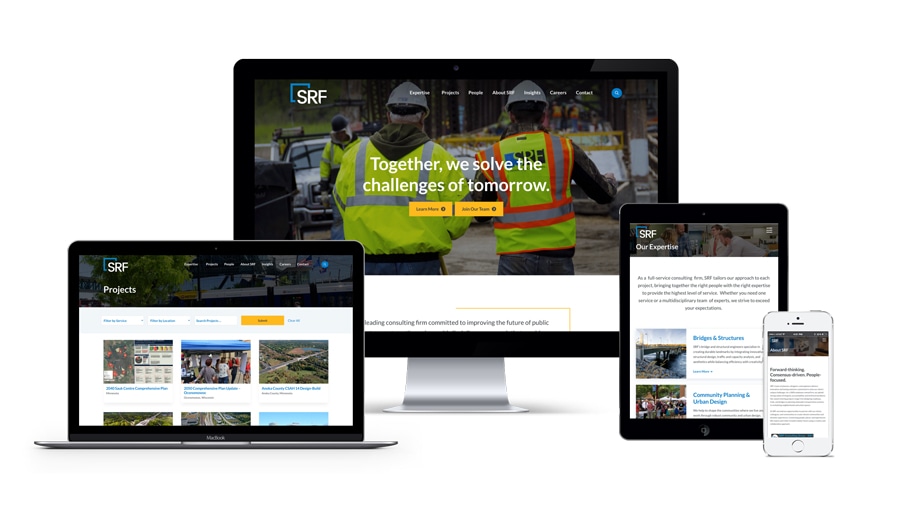
SRF Consulting (SRF) is a premier planning, design, and engineering firm that offers innovation and quality collaboration to both public and private clients. While they serve clients nationally, the majority of their projects are done within the greater Midwest, more specifically in their home state of Minnesota. When they came to Windmill Strategy to discuss a website redesign, they wanted a strategy that met their goals of improving navigation, gathering leads, and attracting new talent.
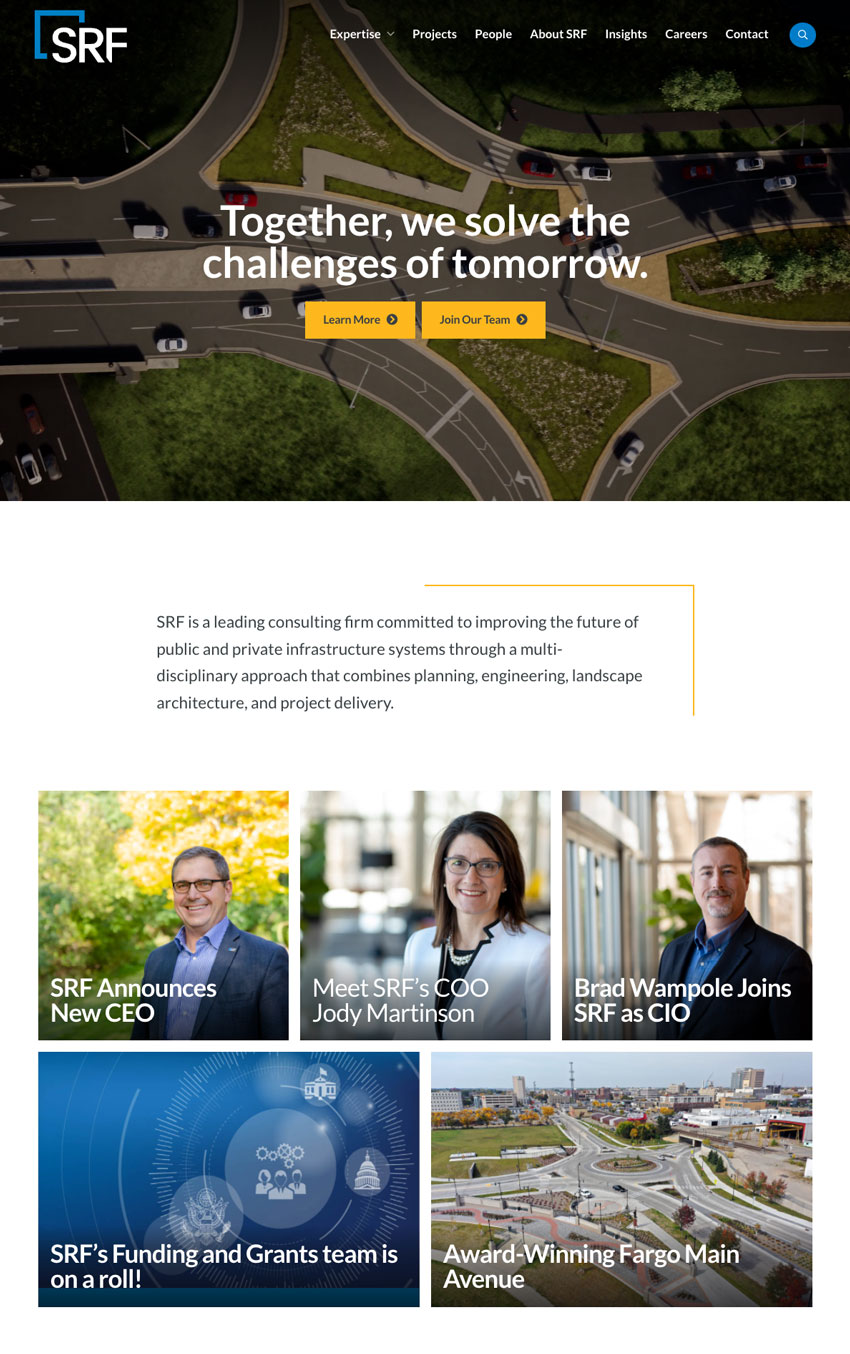
SRF wanted a website that had a state-of-the-art, easy-to-navigate appearance to modernize their brand and business while serving as a point of validation in the sales process. The redesign focused on:
- A modern look and feel that
- Improved navigation and user engagement
- Updated website technology for future editing and maintenance
- Stronger on-page messaging and positioning
Check out our SRF website redesign case study
2. Steven Winter Associates Building Performance Consulting Website Redesign
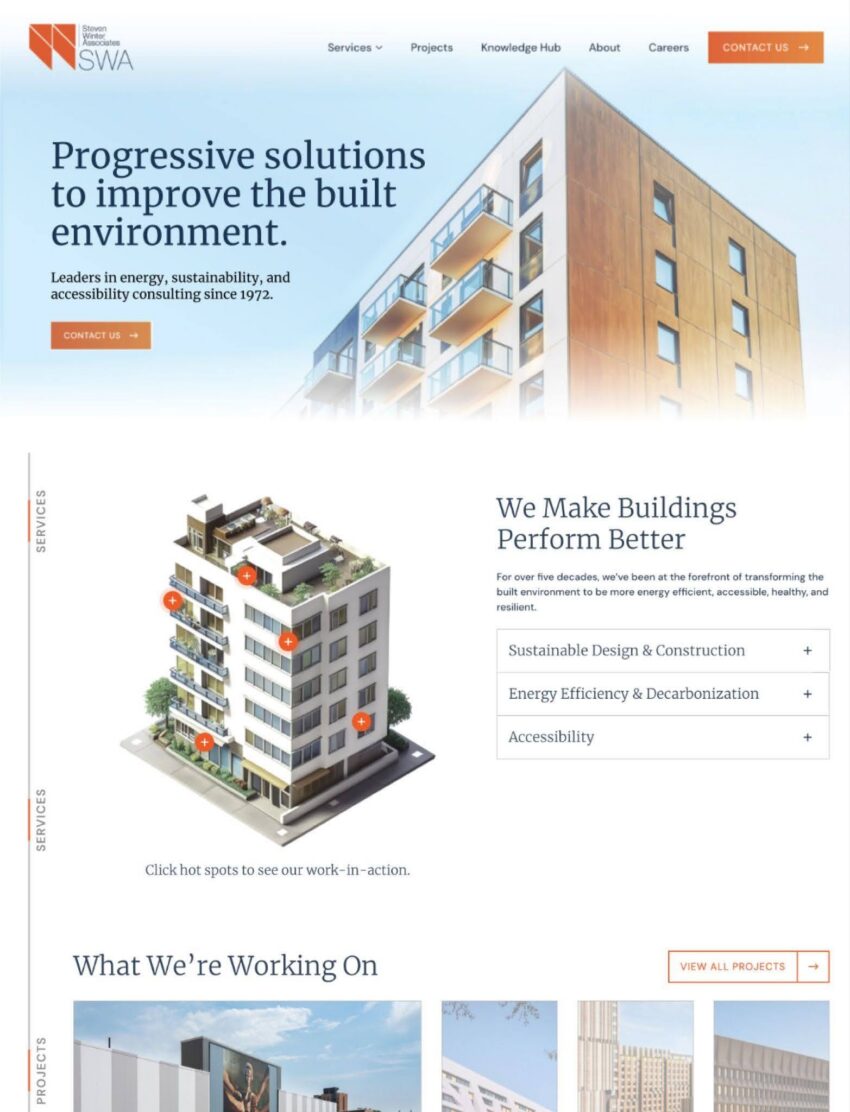
Steven Winter Associates (SWA) is a leading building performance consulting firm with more than 50 years of experience improving the built environment through energy efficiency, sustainability, accessibility, and building science consulting. SWA needed a website that better reflected the company’s expertise, supported recruiting, and made it easier for developers, architects, property managers, and other stakeholders to find relevant information.
SWA’s previous website was outdated and difficult to navigate, with a large content library and disjointed structure that made it harder for users to understand the full range of services offered. Windmill Strategy redesigned the site with:
- Strategic navigation improvements and an expanded mega menu to support user experience and wayfinding
- A clean, consistent visual system with a flexible WordPress backend that made the site easier to manage long-term
- A knowledge hub to better organize and highlight blogs, podcasts, and other resources
- Microsoft Dynamics and ClickDimensions integrations to support lead generation
The result is a stronger engineering website balancing technical expertise, thought leadership, recruiting, and usability within a more modern and manageable digital experience.
Check out our SWA website redesign case study
3. Progressive Design E&D Website Redesign
Progressive Design, a heavy industrial engineering & design consulting firm, was looking for a professional website that would help grow the company and work as a recruiting tool. The old site was outdated and didn’t reflect its capabilities.
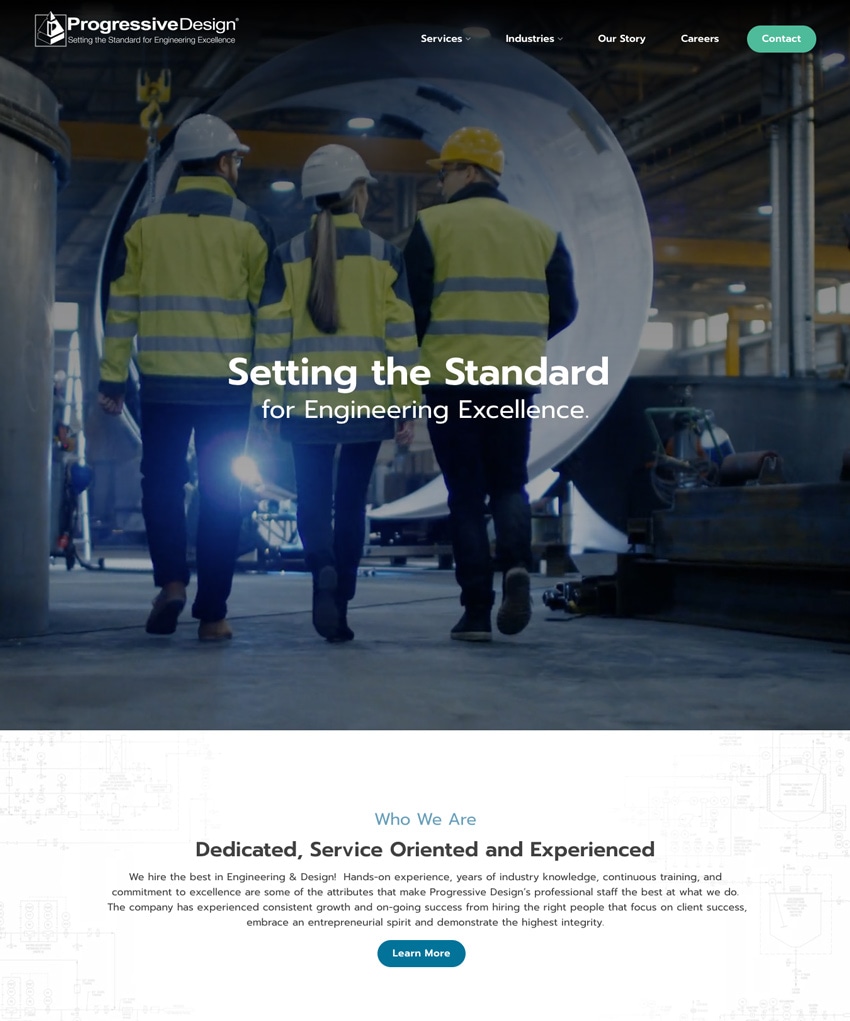
Windmill fulfilled its main objective: to create a website that Progressive Design can send to potential clients and hires that shows Progressive Design as a first-class organization that is desirable to do business with or work for.
4. NEI Electrical Power Engineering Website Redesign
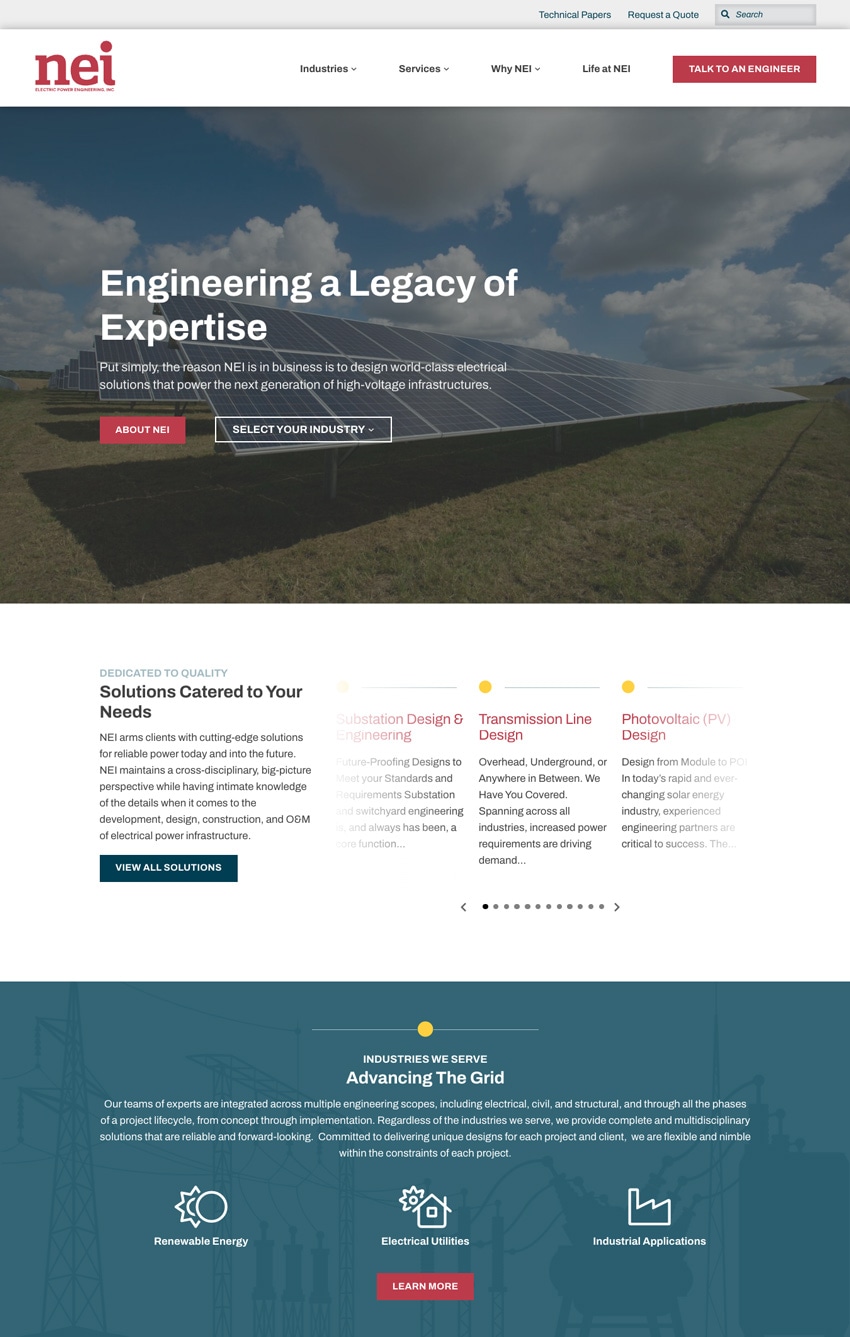
NEI provides world-class electrical engineering solutions that power the next generation of high-voltage infrastructures. NEI tackles all stages from design options to commissioning, as a partner in solving the most complex challenges.
Windmill partnered with NEI to develop:
- Improved brand messaging and positioning
- Optimized site architecture and intuitive site navigation
- Organized service pages with industry-specific information
- Hiring and recruiting improvements to attract industry talent to join the company.
Check out our NEI website redesign case study
5. Landform Website Redesign
Landform is a site design consulting firm that offers services like civil engineering, landscape architecture, master planning, infrastructure, land surveying and water resources design and management. Their services help municipal and commercial clients with site design and development challenges from Site to Finish®. They wanted help updating their website to be engaging, to highlight their diverse expertise, and to clearly differentiate themselves from the competition. Windmill Strategy helped them tell their story by creating a custom, highly visual layout that created focus around their key differentiators.
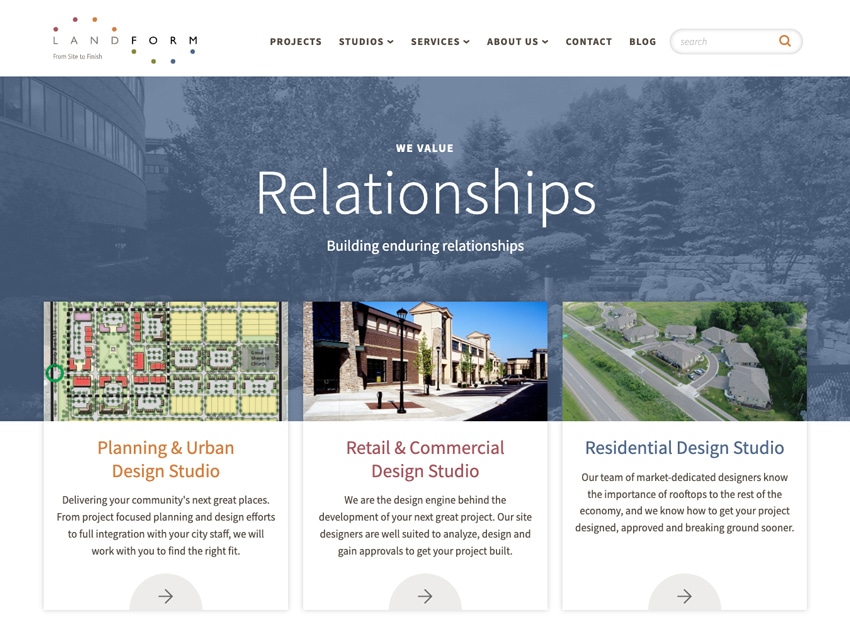
Taking into account the power of visuals, Windmill Strategy revamped Landform’s visual presentation sitewide. For example, the homepage, service pages, and the project gallery all made strategic use of photos. Now, almost every key element on the page is accompanied by a powerful image. This new design is both engaging and elegant.
Check out our Landform website redesign case study
6. Carlson McCain Website Redesign
Carlson McCain, a full-service engineering consulting firm specializing in environmental, engineering and land surveying services, worked with Windmill Strategy to revamp their website to increase the effectiveness, professionalism and appeal of the firm to potential new hires.
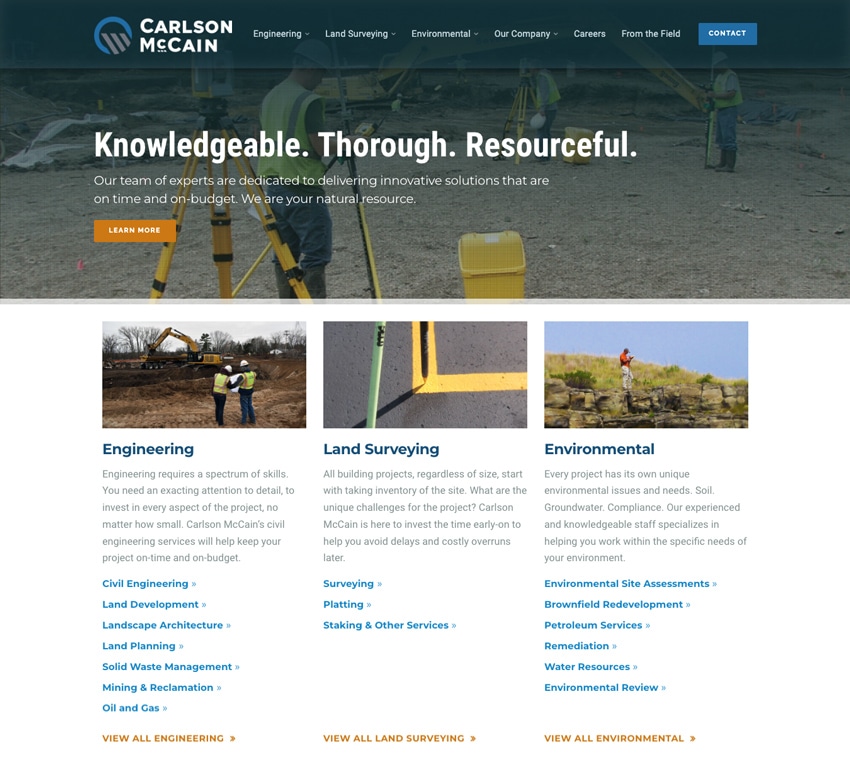
The new site includes:
- Improved visual design and engaging homepage animation
- Messaging and positioning improvements that tell the compelling story of the firm’s rich history and broad services.
- Blog functionality that allows ongoing news, announcements and fresh “from the field” thought leadership content
Check out our Carlson McCain website redesign case study
Engineering Website Design Considerations
Your Company’s Internal Organization Structure Doesn’t Matter to Your Potential Client
One of the primary website opportunities we often find in working with our engineering clients is that all too often the website speaks to the internal-facing solution and employee structure, as opposed to its true goal of being laser-focused on how your customer defines and perceives their need.
Website visitors and prospective clients who are unfamiliar with your organization should be able to quickly find the solution or precise service they’re seeking in the first 5 seconds. An unorganized site structure or navigation will lead to frustration and high bounce rates. A focused website helps prospects find the most relevant services, markets, and project examples faster. By organizing content around how buyers define their needs, your site can better demonstrate your expertise and guide visitors toward the right next step.
Focus Your Website Around the People You Want to Reach
Your website should be built around the people you want to attract, not just the services you offer. Before planning a new website, take time to define who your best-fit clients are, what they need to understand, and what questions they are trying to answer.
You can easily develop personas starting with this list of some job titles for the people who are visiting your website hoping to find solutions to their specific challenges. For engineering firms, those audiences might include:
- City, state or federal public entities
- Departments of transportation
- Park and recreation departments
- Public infrastructure or land development teams
- Private infrastructure or land development teams
- Manufacturing or industrial facilities
- Construction and utility companies
- Commercial architects
These visitors are usually trying to determine whether your firm has the right experience, capabilities, and project understanding to help them move forward. When you understand their perspective, you can organize your website around the information they actually need, including relevant services, markets, project examples, team expertise, and next steps.
Key Content Types and Related Content
Within your engineering website design, there are a few key buckets of content we see most frequently:
- Service or solution content (what you do)
- Industries or markets (who you help; you can help anyone but you should strategically market to those you want to attract most)
- Projects or case studies (proof you can achieve success with their project))
- About or company overview
Most website visitors start on the homepage, then move deeper into products, services, industries, or applications. The site should connect related content so users can keep building confidence. A service page should link to relevant industries, capabilities, resources, and case studies, while an industry page should point users toward the products or services that matter most for that market. Every page should end with a call to action giving users a logical next step and path to conversion.
Case Studies and Project Examples Are Critical
Your prospects are seeking technical information and social validation that you’ve helped others like them develop solutions unique to their problem or opportunity.
Your website needs to include case studies showcasing key information related to the projects you’ve completed. Include things like a project overview, challenges and solutions, project location, and other metadata that can help the user feel more confident in reaching out to you. Case studies turn your claims into proof.
SEO May Seem Low-Priority, but it Should Be a Strong Component
For many engineering firms, referrals, reputation, and existing relationships drive a large share of new business. Because of that, search engine optimization (SEO) can sometimes feel secondary to creating a strong website experience.
While the website itself should be as highly functional as possible, we always recommend considering how SEO reinforces your credibility in the sales process. This becomes especially important as more technical buyers, engineers, and project leaders use search engines and AI tools to research firms before reaching out. Ranking on the first page of Google as an organization supports reputation within the industry.
Recruiting via Your Engineering Website
Your website is often one of the first places candidates go to understand your firm, your projects, and your culture. For engineering firms competing for qualified talent, a strong careers section can play an important role in recruiting. Create a dedicated careers page that gives candidates a quick overview of why they may want to work for your firm, with opportunities to dive deeper into benefits, culture, project types, and open roles. You should brainstorm what content to include by talking to your HR team about the questions they’re most frequently asked during any interview processes. When candidates can easily explore your services, project experience, team expertise, and company values, they get a clearer picture of the work they could be part of.
Engineering Website Design Examples In Conclusion:
Examples of successful engineering websites offer inspiration and ideas that can be applied to your own firm’s site; a few of these key points are worth repeating.
- Clarity is a top priority, especially when marketing complex engineering and design services. Lead with a positioning statement that resonates with your target audience.
- Incorporate case studies and project examples that illustrate the breadth of your capabilities and experience.
- Claim your space as a thought leader and provide value to site visitors with optimized content, specialized industry news, and useful information.
- Maximize the value of your site as a tool for recruiting engineers.
Accomplishing these goals efficiently with a high level of quality and consistency requires a comprehensive strategy. The website strategy that Windmill Strategy employs is to design and develop sites that have the right flow and organization to help increase the number of better-qualified, high-caliber leads your engineering firm receives. It all starts with a conversation. If you’re ready to begin, fill out our contact form today and schedule a free consultation.