
Why LinkedIn Ads Should Focus on Brand Awareness Instead of Lead Generation
LinkedIn is the default paid social channel for B2B. With more than a billion members and unmatched targeting by job title, seniority, function, and industry, it makes sense that most industrial and technical B2B companies jump straight to lead generation campaigns. Run a Lead Gen Form ad, capture contacts, hand them to sales. Done.
The problem is that this approach rarely works for industrial buyers. LinkedIn lead generation campaigns are expensive, often produce low-intent leads, and don’t map to the way technical buyers actually evaluate and purchase. A clear pattern emerges in the B2B industrial space:. LinkedIn is a powerful awareness channel pretending to be a conversion channel. Once you shift your strategy to match what LinkedIn actually does well, your budget works harder and your sales team gets better-qualified conversations.
- The Problem with LinkedIn Lead Generation Campaigns for Industrial Companies
- Why Brand Awareness Is the Better Play
- What Effective LinkedIn Brand Awareness Looks Like for B2B Industrial Companies
- How LinkedIn Fits Into a Broader Paid Media Mix
- When LinkedIn Lead Generation Campaigns Can Work
- Building a LinkedIn Strategy That Actually Fits Industrial Buying
- Get Your LinkedIn Strategy on the Right Track
- Frequently Asked Questions
The Problem with LinkedIn Lead Generation Campaigns for Industrial Companies
Three structural issues make direct lead generation a poor fit for most B2B industrial companies.
High Cost Per Lead, Questionable Quality
LinkedIn CPCs typically run three to five times higher than Google Ads, and cost per lead for B2B campaigns usually lands between $75 and $250. Costs are often even higher when you’re targeting niche audiences such as plant managers, controls engineers, or procurement directors at mid-sized manufacturers.
The leads themselves are frequently low intent. LinkedIn’s pre-filled Lead Gen Forms make submission frictionless, which sounds like a benefit until you realize that many submissions come from people who tapped a button out of mild curiosity rather than genuine buying interest.
Long, Complex Sales Cycles Don’t Fit Campaign Attribution
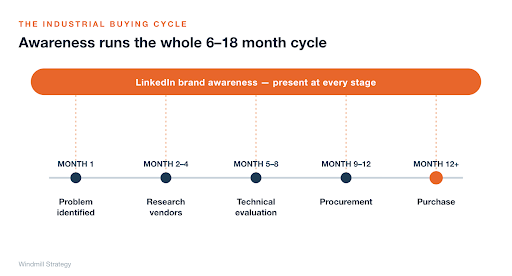
Industrial sales cycles often run six to 18 months and involve multiple decision-makers. Engineers specify, managers evaluate, executives approve, and procurement teams negotiate. A lead gen form filled out in March may not turn into a real sales conversation until the following year.
LinkedIn’s attribution window cannot follow that journey, so the campaign that actually influenced the deal often gets no credit. This makes it nearly impossible to prove ROI on direct lead generation and frequently leads to budget cuts on campaigns that may have been working at a higher-funnel level.
Niche Audiences Burn Out Fast
When your total addressable audience on LinkedIn is only a few thousand people, such as engineering directors at mid-market manufacturers in the Midwest, you’ll saturate that audience within weeks of running lead generation campaigns.
The algorithm keeps optimizing for form fills among the same exhausted pool. Ad frequency climbs, click-through rates drop, and your cost per lead gets worse over time rather than better.
Why Brand Awareness Is the Better Play
Reframing LinkedIn as an awareness channel solves the structural problems above and aligns the platform with how industrial buying actually works.
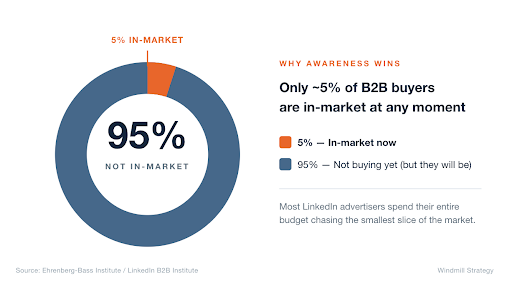
You’re Investing in the 95% Who Aren’t Buying Yet
Research from the Ehrenberg-Bass Institute and LinkedIn’s B2B Institute consistently shows that only about 5% of B2B buyers are in-market at any given moment. The other 95% will enter a buying cycle eventually, whether that is weeks, months, or years from now.
Awareness campaigns keep your company top of mind during that waiting period, so when those buyers do start evaluating vendors, your company is already a familiar name on the shortlist.
Awareness Creates a Halo Effect Across Your Other Channels
Running brand awareness campaigns alongside your search and email programs has been shown to improve conversion rates across those other channels. LinkedIn impressions warm up your audience, so when someone sees your name in a Google search result, a trade publication, or their inbox, they recognize it.
Recognition reduces friction at every step of the buying journey.
It Matches How Industrial Buyers Actually Research
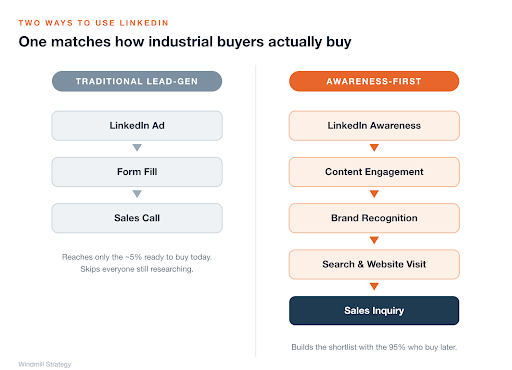
Engineers and technical buyers do not fill out lead generation forms from cold ads. They read whitepapers, compare specifications, ask peers, attend webinars, watch product demonstrations on YouTube, and evaluate vendors over months.
Awareness campaigns that deliver genuinely useful content, such as trend reports, technical guides, benchmark data, and honest perspectives on industry shifts, build credibility during that research phase without asking for a premature commitment. That credibility is what gets you into the consideration set when buying intent finally activates.
What Effective LinkedIn Brand Awareness Looks Like for B2B Industrial Companies
Shifting strategy is one thing. Executing it well is another.
A few principles separate awareness campaigns that build real brand equity from awareness campaigns that simply burn budget.
Thought Leadership Over Polished Corporate Ads
Thought Leader Ads, which promote posts from real people at your company rather than from the company page, consistently outperform standard sponsored content in engagement and reach.
Put your subject matter experts front and center. Feature your VP of Engineering discussing a manufacturing trend, your product manager explaining a recurring technical challenge, or your CEO sharing a perspective on where the industry is heading.
People engage with people, not logos.
Ungated, Value-First Content
Stop gating every useful resource behind a lead form.
Share the technical insight, benchmark data, or market analysis directly in the ad or in a linked article. Yes, you lose the email address. In return, you gain reach, trust, and the type of credibility that gets your company mentioned when buyers ask peers for vendor recommendations.
That is the entire purpose of awareness marketing.
Test Creative Aggressively and Watch Frequency
Run multiple creative variations with different headlines, opening copy, imagery, and formats so you can identify what resonates with your audience.
Monitor ad frequency closely. When the same person has seen the same ad seven or eight times in a month, you’re no longer building awareness. You’re creating fatigue and wasting budget.
Refresh creative every four to six weeks and rotate audience segments to keep engagement healthy.
Measure What Actually Matters
Awareness campaigns should be measured using awareness metrics. Focus on impressions, reach within your target account list, engagement rate, video completion rate, ad frequency, and growth in branded search volume or direct traffic over time.
LinkedIn’s Brand Lift Studies, available at higher spend levels, can also help measure recall and consideration directly.
Resist the temptation to judge an awareness campaign solely by form fills. That would be like measuring a hammer by how well it cuts wood. Look instead at leading indicators.
Set Realistic Budgets and Timelines
Awareness campaigns can often run effectively at lower daily budgets than lead generation campaigns because you’re optimizing for reach and CPMs rather than clicks or conversions.
However, awareness requires consistency. Building recognition takes months, not weeks. Plan for a six- to 12-month commitment and avoid shutting campaigns down after 60 days simply because they are not generating direct conversions.
How LinkedIn Fits Into a Broader Paid Media Mix
For most B2B industrial companies, LinkedIn should not be the primary paid channel. It should be one component of a balanced marketing strategy.
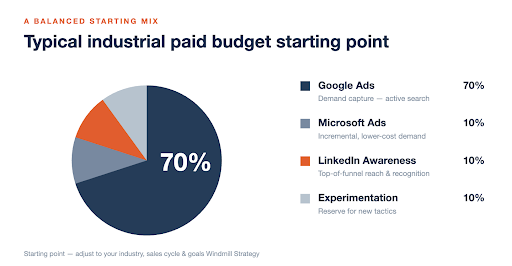
A reasonable starting allocation for many industrial marketers might look like this:
70% Google Ads 10% Microsoft Ads 10% LinkedIn brand awareness 10% reserved for testing and experimentation
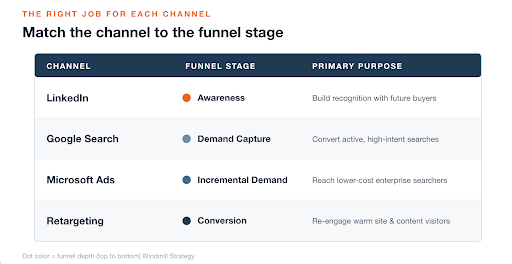
Google captures buyers when they have active, expressed intent, which is often the highest-converting moment in the funnel.
Microsoft Ads reaches an older, frequently higher-income demographic that often overlaps with enterprise buyers while delivering lower CPCs than Google.
LinkedIn fills the awareness gap by reaching the right people before they begin searching.
The exact percentages will vary based on your industry, sales cycle, and objectives. The principle remains the same. Invest the majority of your budget where intent is strongest and use LinkedIn to build the audience that will eventually generate that intent.
When LinkedIn Lead Generation Campaigns Can Work
None of this means that LinkedIn lead generation campaigns are useless. They absolutely have a place, just not as the primary strategy.
Lead Gen Forms can work well for mid-funnel, low-commitment offers such as webinars, technical assessments, and product demonstrations that target audiences already familiar with your brand.
In other words, lead generation works best as a retargeting tactic after awareness has done its job.
These campaigns can also perform well for highly specific and time-sensitive offers, such as regional trade show meeting requests or limited-capacity technical workshops where the audience is narrowly defined and the offer is highly relevant.
Where they typically struggle is cold outreach to niche industrial audiences with long sales cycles and multiple decisionmakers, for a large, considered purchase with a consultative sales process.
The strongest programs combine sustained awareness campaigns that build and warm the audience with targeted retargeting campaigns that capture interest from people who have already engaged with your content.
Awareness sets the table. Retargeting closes the loop.
Building a LinkedIn Strategy That Actually Fits Industrial Buying
The mistake most B2B industrial companies make on LinkedIn is treating it like Google Ads and expecting bottom-of-funnel performance from a top-of-funnel channel.
Once you stop measuring LinkedIn against conversion benchmarks it was never designed to hit, the platform’s value becomes much clearer.
LinkedIn is where future buyers spend professional time. It is where subject matter experts can build authority. It is where consistent visibility translates into recognition that strengthens the performance of every other marketing channel you operate.
An awareness-first strategy does not mean an awareness-only strategy. It means aligning the platform with its strengths, then layering retargeting and conversion tactics on top after you’ve earned the audience’s attention.
Get Your LinkedIn Strategy on the Right Track
If your current LinkedIn ads are not generating the results you expected, or if you’re unsure whether your broader paid media mix aligns with how industrial buyers actually research and purchase, you can explore our full PPC management services or start with our focused Digital Marketing Quick Start.
This focused engagement evaluates your existing campaigns, identifies what is working and what is wasting budget, and provides a practical roadmap for the channels and tactics that best fit your audience, sales cycle, and growth goals.
You’ll receive clear recommendations you can act on, whether that means reallocating spend across Google, Microsoft, and LinkedIn, shifting from lead generation to awareness, or rethinking your measurement framework.
No long commitments. No boilerplate strategy decks. Just a focused assessment of your marketing and a practical plan for moving forward.
Frequently Asked Questions
Is LinkedIn good for lead generation in B2B marketing?
LinkedIn can generate leads, but it often performs best when used to build awareness and credibility first. For industrial and technical B2B companies with long sales cycles, lead generation campaigns tend to work better as retargeting efforts after prospects have already engaged with your brand.
Why are LinkedIn leads often expensive?
LinkedIn’s audience targeting is highly specialized, which drives up advertising costs. In addition, many lead generation campaigns rely on pre-filled forms that can attract low-intent submissions, increasing cost per qualified lead.
What is the best objective for LinkedIn Ads?
For many industrial B2B companies, brand awareness and thought leadership objectives produce stronger long-term results than direct lead generation. Awareness campaigns help establish credibility and keep your company top of mind before buyers enter the market.
How long does it take for LinkedIn brand awareness campaigns to work?
Brand awareness campaigns typically require several months of consistent exposure before measurable results appear. Most companies should plan for a six- to 12-month timeframe to build meaningful recognition and influence future buying decisions.
How should I measure LinkedIn brand awareness campaigns?
Key metrics include impressions, reach, engagement rate, video completion rate, branded search growth, direct traffic growth, and audience frequency. These indicators provide a better measure of awareness than lead volume alone.
Should LinkedIn replace Google Ads in a B2B marketing strategy?
No. Google Ads captures active demand from buyers who are already searching for solutions. LinkedIn is most effective as a complementary channel that creates awareness and demand before those searches occur.
What types of content perform best on LinkedIn for industrial companies?
Thought leadership content, technical insights, industry trends, benchmark reports, expert commentary, case studies, and educational resources typically outperform promotional product-focused content. Buyers are more likely to engage with expertise than sales messaging.